From the comments on the last post there was some concern about the safety of my setup. I really appreciate these and please keep these coming because criticism is a excellent way of finding a potential problem.
Stabilisers:
I plan on using a consumable catalyst
Sparging in a pressure vessel:
The pressure vessel does have a relief valve, currently set to 130PSI. I should probably lower this, I think all I need is a new spring. After some peroxide came out under pressure however I decided is probably wasn't a good idea to sparge in a closed vessel.
What am I doing to the air:
Two oil dental air compressors (oil free) feed into an an air receiver. The air is filtered by a 1micron filter then fed into a refrigerated air dryer. There is also a 5 micron pre filter on each compressor filter. Currently the setup is running at 60PSI which should put the dew point at around -15C. I plan on increasing the system pressure as the concentration increases to get a lower dew point.
Contaminants:
I have tested the setup extensively with distilled water to see if I could catch any contaminants collecting, couldn't see any.
Exhaust:
This is probably my greatest concern at the moment. After I initially realised the exhaust was an issue I was bubbling the exhaust through water and venting the exhaust outside (that was when the vessel was closed, with one in and one out pipe). With the open vessel I simply put the entire setup outside and had a large fan to blow fumes away from anyone, which seems to be quite effective and we can't smell anything inside the workshop. Also I only sparge at night when there is no one around. I would be interested in finding out how bad the vapour is for you. VHP is used as a disinfectant so it can't be good, I just figured that because the vapour was not particuary concentrated (initially at least) and that it was being diluted with so much air that it wouldn't be a problem. I suppose I was lucky that my peroxide wasn't too concentrated before I realised that the vapour was an issue.
I think what I might do is:
Sparge outside, further away from the workshop.
Turn the sparge gas off when I need to inspect the rig.
Qbert:
I had the understanding that it was best to filter out contaminants using IX when the peroxide is at as low of a concentration as possible. That is because the IX resin can act as a fuel (i think its plastic) and the IX process can generate heat. Is there any other reason why it would need to be filtered after concentration?
It seems like vacuum sparging would also be a better method because it may increase the speed of concentration., but not necessarily from a safety perspective. The problem people who vacuum distill their peroxide have is that if they loose vacuum, the concentrated peroxide vapour that is safe at vacuum will decompose because it is suddenly at a much higher pressure. That probably won't be an issue as there won't be nearly as much vapour as if the peroxide were boiling. I would appreciate any references anyone has found on vacuum sparging.
Tuesday, 3 January 2012

Monday, 2 January 2012
After a bit of a rocky start the sparing setup is going relatively well. Last night starting at about midnight and going to about 5am we concentrated 10L from about 45 ish percent to 54 percent safely. It seems that the setup can concentrate around 10% in 5 hours (obviously this will decrease as the peroxide increases in concentration). Up until now my concentration has been on getting the setup working safely, but for the next sparge I intend to take readings of liquid level and peroxide concentration regulary. Eventually I would like to be able to calculate how long a given volume of peroxide will take to concentrate.

I have settled on a completely modular setup using 19L beer kegs. The kegs have two quick connect fittings and one large hole used for cleaning. The brilliant thing about kegs is that they have a stainless syphon going to the bottom which can be used both for bubbling air through and for getting the concentrated peroxide out for use. To get liquid out you simply need to pressurise the keg gently through the kegs gas fitting. Its good not to have to worry about contamination from adding a sparge line and other bits to the vessel and when the sparge is complete all that needs to be done is close the keg up and put it in the fridge. The kegs also make excellent storage containers.
Initially I had intended to keep the large hole in the top of the keg closed and pipe the has out of the keg through the gas fitting. This enabled the gas to be easily piped outside and also allows for the condensate to be collected, from which the rough rate of sparing can be calculated and also the rate of loss of peroxide. Because of the pressure drop through the dry and wet gas lines, the keg is under quite a bit of pressure and not realising this I unplugged the gas in line which caused peroxide to spray all over me. I was wearing full protective equipment it wasn't an issue but it does go to show how easily mistakes can happen. Because of that we decided to let the wet gas come out the large opening in the top of the keg so that it is not under any pressure. Bellow is a picture of me wearing my has mat suit with the setup inside. The keg and heater is inside the drum, which acts as a containment vessel in the event of a leak. Our safety protocol calls for wearing suits for bulk handling and pvc raincoats/waders with long gloves and face shields for collecting samples. We had one other incident when filling the contender where the cap wasn't porpelly on the peroxide container and some spilt on my suit.
One thing I did not anticipate was how to deal with the vapour which comes off. I was under the impression that peroxide, like water didn't have any smell and that as long as we had good ventilation we would be fine. Well after about an hour of sparing in the workshop we all felt quite ill and had bad headaches so we had to move the setup to the doorway and have a fan to blow out the fumes. I think the strong smell comes mainly from the stabilisers
Tuesday, 27 December 2011
Today I spent a long day organising the workshop. Its still not completely functional, but its getting there. Organising is really an evolution, and is something that you have to give a bit of throughout to and learn to use if you want to be functional not just look pretty. At the moment we have more space than we know what to do with but I am sure that will change once we get used to working in a bigger area. Its strange having to walk for a good 20m to wash your hands.


I am still working on the sparging setup. I have moved from a comum made of PVC to a hot water urn, and now to a stainless keg. Last night I thought I had everything ready for a first batch using the urn. The setup was working well with water, with no impurities in the water after a few runs. I cleaned everything then added a small amount of peroxide to the urn which started fizing immediately from one section of the heating element (while it was off). I think that the element must be braised with something containing a incompatible material (silver?). I also found out that the heating element was not stainless but copper coated in stainless when a bit of the coating flaked off. I am running some tests with a 19L keg now. The heating always a issue. At the moment I am heating the sparging air with a air conditioning condenser in the urn, as well as the keg with another electric heater. One thing I learnt from the PVC tube is that you want the number of things in contact with the peroxide to be kept to a minimum, so you really need to heat from the outside. I am thinking of immersing the keg in a water bath but that seems a little messy. Heating the air is a more elegant solution but even with the air piping hot it barely warms the solution, and it takes quite a while to heat up.
I plan to do a compatability test with the keg wendesday and if everything goes well I will line the clean area with plastic and concentrate the first batch. I would like to set everything up so that I don't have to transfer any peroxide between vessels myself while sparging. The great thing about using a keg is that it is concentrated in the same vessel it will be stored in. I haven't figured out how I will transfer the peroxide out of the keg for use. It has two connections on it, one for liquid out (has a tube going to the bottom of the vessel) and one for gas in. I will probably have a small hand pump to pump air in to the keg once I close the lid which will push liquid out of the liquid fitting. Usually carbon dioxide is pumped into the vessel from a cylinder.


I am still working on the sparging setup. I have moved from a comum made of PVC to a hot water urn, and now to a stainless keg. Last night I thought I had everything ready for a first batch using the urn. The setup was working well with water, with no impurities in the water after a few runs. I cleaned everything then added a small amount of peroxide to the urn which started fizing immediately from one section of the heating element (while it was off). I think that the element must be braised with something containing a incompatible material (silver?). I also found out that the heating element was not stainless but copper coated in stainless when a bit of the coating flaked off. I am running some tests with a 19L keg now. The heating always a issue. At the moment I am heating the sparging air with a air conditioning condenser in the urn, as well as the keg with another electric heater. One thing I learnt from the PVC tube is that you want the number of things in contact with the peroxide to be kept to a minimum, so you really need to heat from the outside. I am thinking of immersing the keg in a water bath but that seems a little messy. Heating the air is a more elegant solution but even with the air piping hot it barely warms the solution, and it takes quite a while to heat up.
I plan to do a compatability test with the keg wendesday and if everything goes well I will line the clean area with plastic and concentrate the first batch. I would like to set everything up so that I don't have to transfer any peroxide between vessels myself while sparging. The great thing about using a keg is that it is concentrated in the same vessel it will be stored in. I haven't figured out how I will transfer the peroxide out of the keg for use. It has two connections on it, one for liquid out (has a tube going to the bottom of the vessel) and one for gas in. I will probably have a small hand pump to pump air in to the keg once I close the lid which will push liquid out of the liquid fitting. Usually carbon dioxide is pumped into the vessel from a cylinder.
Wednesday, 21 December 2011
Successful lathe move
Having learnt my lesson from the unsuccessful lathe move of last week, I decided to hire someone who had moved lathes before and did know what they were doing for the second attempt at moving the lathe. This time round there were no issues.....


I am having quite allot of trouble with peroxide compatibly. I used only materials that were compatable (PVC, SS and PE), cleaned meticulously, rinsed with distilled water, then acid and still I get a stream of bubbles. At the moment the sparging column is a PVC pipe, but I am thinking I will switch to all Stainless. At the moment I am pumping warm water from a hot water urn through the column to heat the peroxide, but it occurred to me that I could just use the urn (which is all stainless) and save myself quite a bit of trouble. I will have to replace the seals with viton for compatibility and replace the tap but that should be it. The one downside is that it has a short aspect ratio which wont give much time for the air to be in contact with the solution but the vapour coming off seems saturated as it is so I dont think this will result in a loss of efficiently.
Here are a few pictures of the final PVC concentrator. The three barbs which can be seen are for heating water in, out and air in. I used sprinkler fittings to spray air, which allows for easy adjustment.


Tuesday, 20 December 2011
Its been quite a while since my last post, and things haven been progressing quite as fast as I had hoped, but I thought I would post an update of where we are at and what we are working on.
We have spent most of the last two weeks moving into the new workshop. As all of the shelving and cupboards I had in my old workshop belonged to my parents, we didn't really have anywhere to put things and everything was on the floor for a while which made it very difficult to find things. ABSOE kindly donated some shelving which was a big help and things are now allot neater, although there is still a way to go before we have a completely functional workshop.
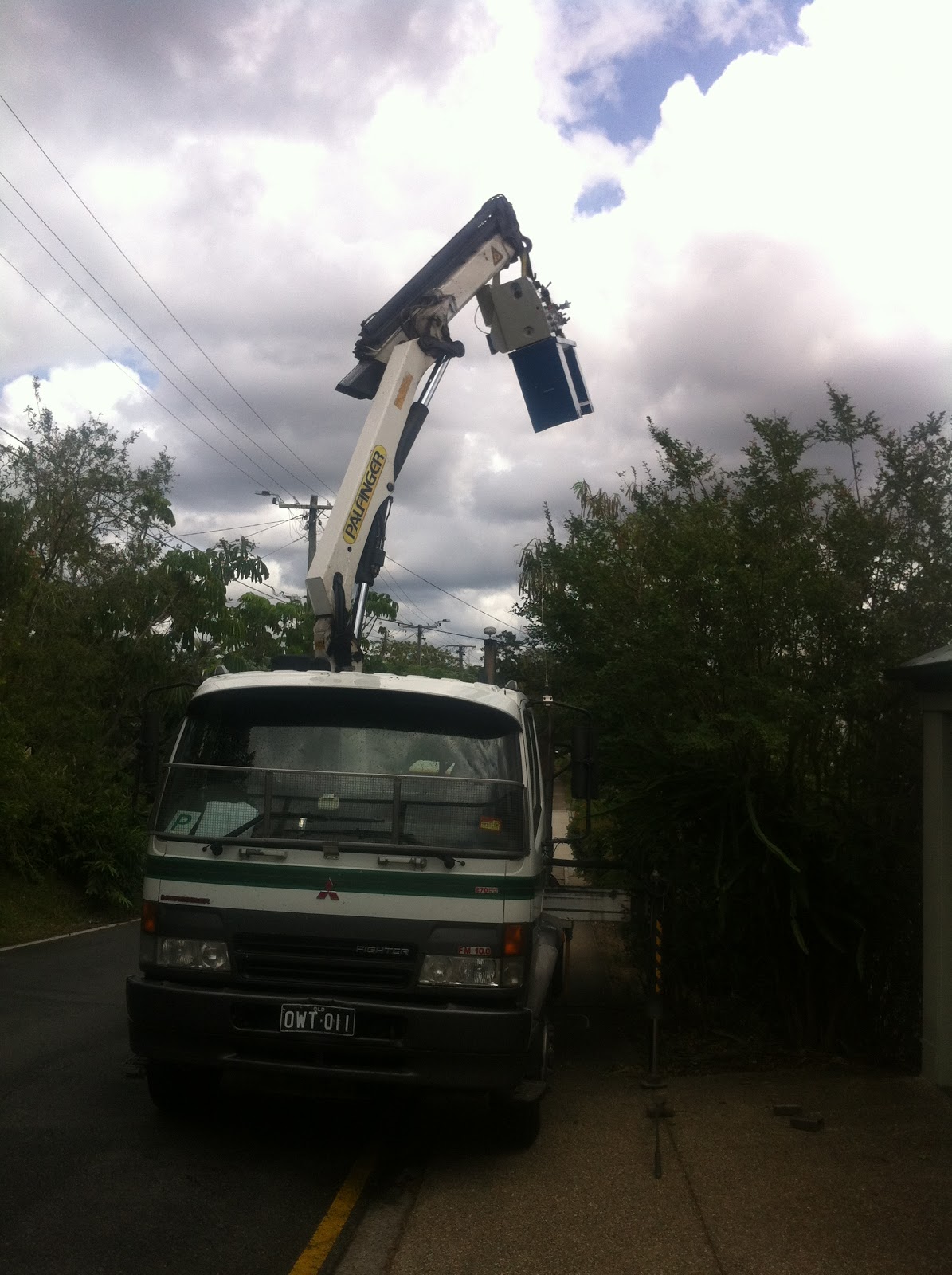
We moved the mill in but there was an incident moving the lathe. I hired a chap to move it and short story, he dropped it. He hadn't moved machinery before, which become evident quickly and he was trying to drag it along my wooden garage floor with his crane and a rope tied to the bed. Any person with half a brain could have seen that if you try to pull something that is top heavy from its top it will fall over! Unfortunately I wasn't paying close enough attention to him to stop him. I should have said something when he tried to sling around the lead screws but he got annoyed when I suggested a better way so I tried to stay out of his way, figuring he probably knew what he was doing. There is a lesson there. the damage isn't too bad, a bent lead screw and few broken hand wheels, which I should be able to get spares for. I am slightly worried that there might be more extensive damage to the bed, like a crack but it seems to slide the same and it is not misaligned. After he dropped it he had the nerve to say that it was my fault because I should have been there supporting it as it fell over. I told him if I had I would be underneath it. He diffident have in insurance and I doubt that even if I took him to the small claims tribunal and won, he would have any money to give me. I have definitely learnt a valuable lesson. The thing that is most annoying is that I will be without a lathe for months. One of the good thing about being in an industrial area is that everything you need is close by. We borrowed the neighbours forklift to move the mill in.


I am close to getting my peroxide concentrator up and running. I have built and tested a prototype sparging setup and have all the parts for a second version. I decided to peruse two methods for concentrating, sparging, and vacuum evaporation. I haven't started work on the vacuum setup but will start after the sparger is up and running. I decided to try a vacuum method to see if I could avoid some of the losses ascoaited with heating the peroxide for sparging. I have a really nice oil free vacuum pump/compressor which should be good for both setups. because the concentrated peroxide doesn't have a good shelf life I plan on storing it frozen or in a fridge. I have so far only been sparging water as I don't currently have a space clean enough that I would feel comfortably handling peroxide in.
We moved the test stand to the workshop on the weekend, and we are currently getting it ready for another test. All that really needs doing from a mechanical perspective is replacing the actuated valves with solenoids, and calibrating the flow rate with needle valves installed before the valves. The software needs a bit more work. I am a bit torn between getting the engine I spent a long time working on running and getting peroxide production going. I guess I should probably finish what I start, before moving on to new things.
We have spent most of the last two weeks moving into the new workshop. As all of the shelving and cupboards I had in my old workshop belonged to my parents, we didn't really have anywhere to put things and everything was on the floor for a while which made it very difficult to find things. ABSOE kindly donated some shelving which was a big help and things are now allot neater, although there is still a way to go before we have a completely functional workshop.
We moved the mill in but there was an incident moving the lathe. I hired a chap to move it and short story, he dropped it. He hadn't moved machinery before, which become evident quickly and he was trying to drag it along my wooden garage floor with his crane and a rope tied to the bed. Any person with half a brain could have seen that if you try to pull something that is top heavy from its top it will fall over! Unfortunately I wasn't paying close enough attention to him to stop him. I should have said something when he tried to sling around the lead screws but he got annoyed when I suggested a better way so I tried to stay out of his way, figuring he probably knew what he was doing. There is a lesson there. the damage isn't too bad, a bent lead screw and few broken hand wheels, which I should be able to get spares for. I am slightly worried that there might be more extensive damage to the bed, like a crack but it seems to slide the same and it is not misaligned. After he dropped it he had the nerve to say that it was my fault because I should have been there supporting it as it fell over. I told him if I had I would be underneath it. He diffident have in insurance and I doubt that even if I took him to the small claims tribunal and won, he would have any money to give me. I have definitely learnt a valuable lesson. The thing that is most annoying is that I will be without a lathe for months. One of the good thing about being in an industrial area is that everything you need is close by. We borrowed the neighbours forklift to move the mill in.


I am close to getting my peroxide concentrator up and running. I have built and tested a prototype sparging setup and have all the parts for a second version. I decided to peruse two methods for concentrating, sparging, and vacuum evaporation. I haven't started work on the vacuum setup but will start after the sparger is up and running. I decided to try a vacuum method to see if I could avoid some of the losses ascoaited with heating the peroxide for sparging. I have a really nice oil free vacuum pump/compressor which should be good for both setups. because the concentrated peroxide doesn't have a good shelf life I plan on storing it frozen or in a fridge. I have so far only been sparging water as I don't currently have a space clean enough that I would feel comfortably handling peroxide in.
We moved the test stand to the workshop on the weekend, and we are currently getting it ready for another test. All that really needs doing from a mechanical perspective is replacing the actuated valves with solenoids, and calibrating the flow rate with needle valves installed before the valves. The software needs a bit more work. I am a bit torn between getting the engine I spent a long time working on running and getting peroxide production going. I guess I should probably finish what I start, before moving on to new things.
Sponsorship from ABSOE Business Equipment.
A big thanks to ABSOE who have kindly sponsored us by giving us some industrial shelving. ABSOE is a Brisbane based business that specialises in new and used business equipment. They have a huge range of office equipment & fittings, shelving, storage, shop fittings and solutions. They also have a huge building, which used to be an old ice cream factory which is interesting to look through.
Monday, 19 December 2011

Subscribe to:
Posts (Atom)